Show Review & Photos: Chase & Status @ Showbox Market

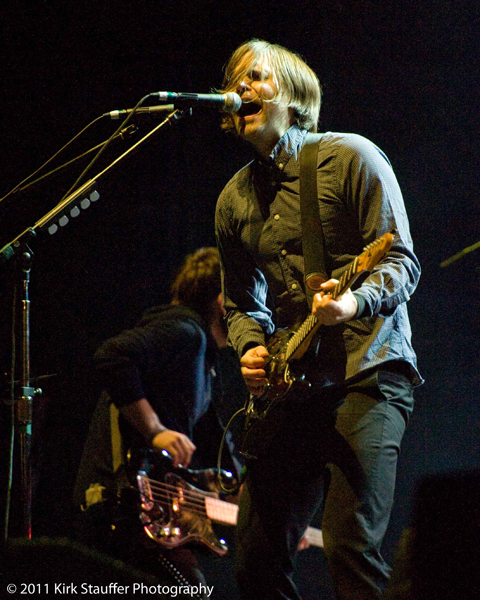
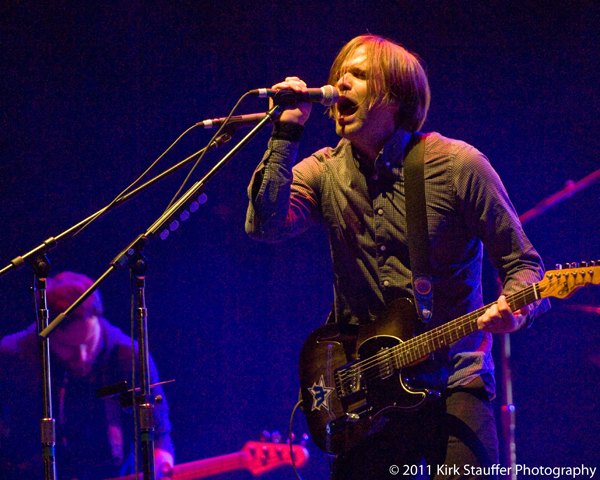
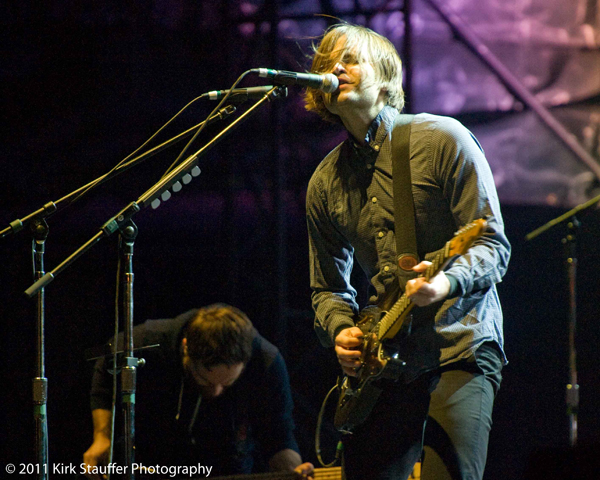
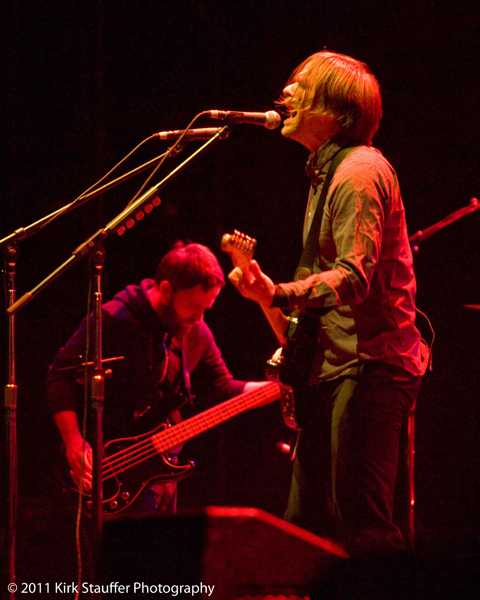
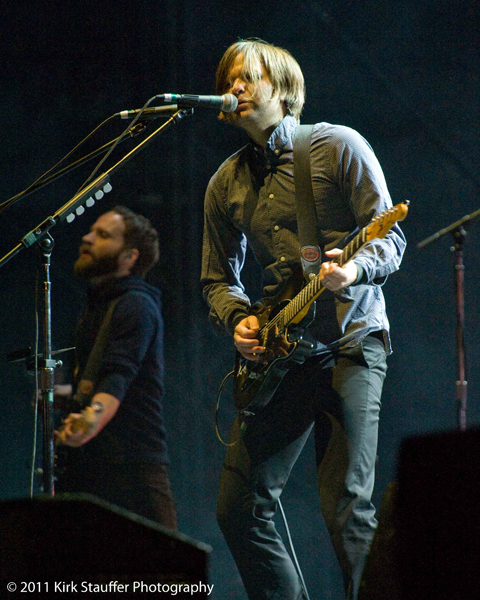
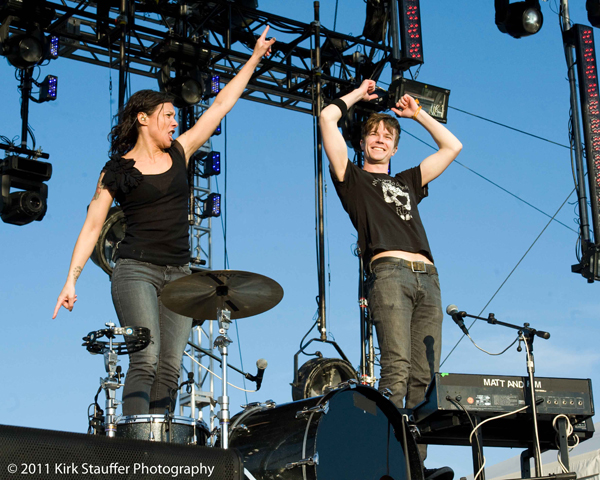
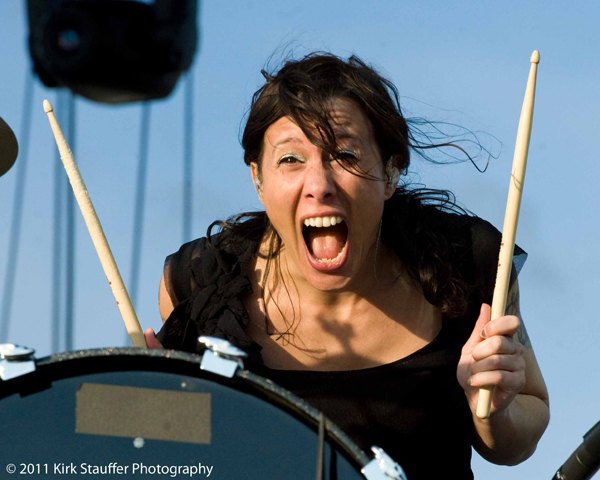
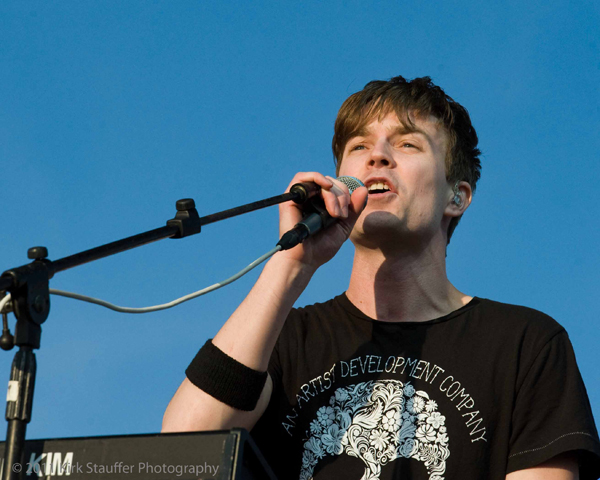
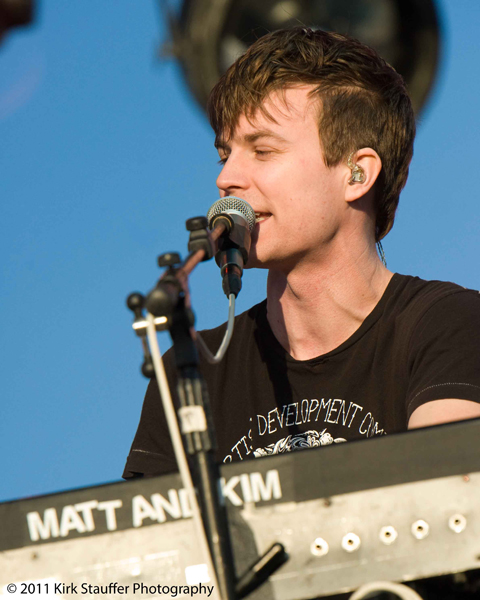
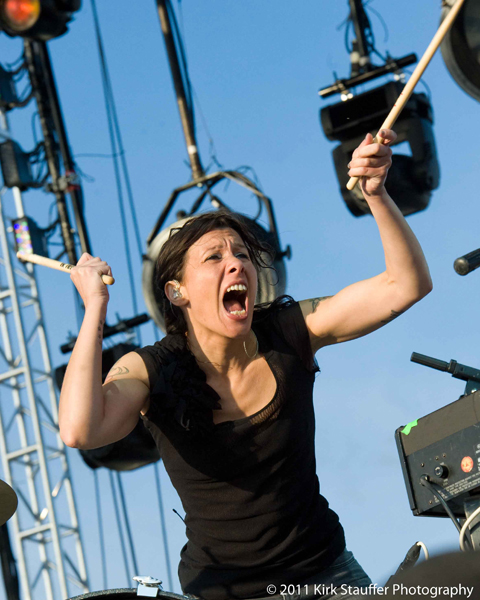
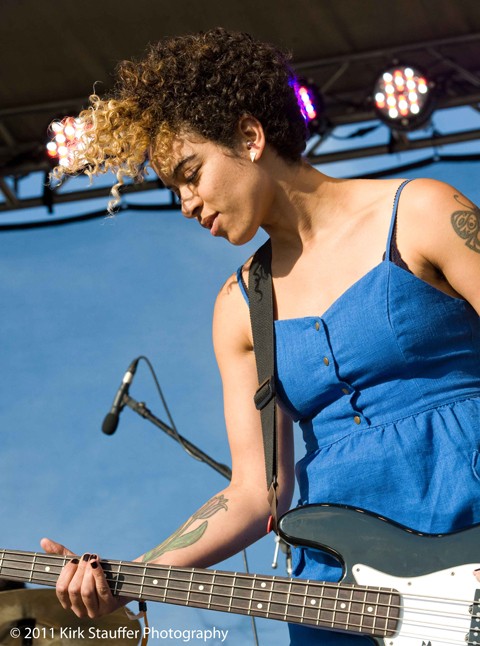
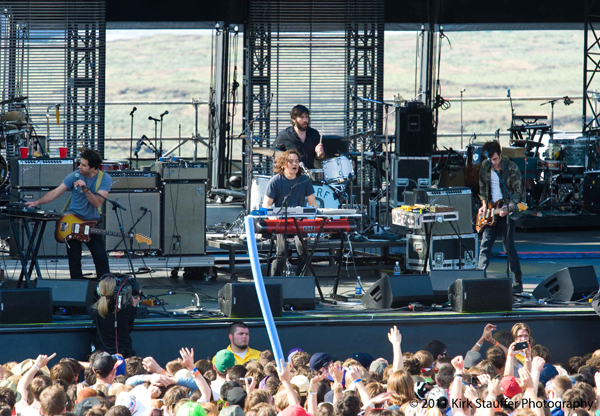
Seattle was treated to some tasty London dance and electronica, dubstep – you name it – on Thursday night in the form of Chase & Status. The duo, Will Kennard and Saul Milton brought drummer Andy Gangadeen plus singers Rage and Delilah with them for a show that included laser beams (visual and aural) and the perfect placement of Milton and Kennard behind keys lit with red light bulbs in the shapes of C & S. There was a good balance of songs from each of Chase & Status’ CDs, 2008’s More Than ALot and 2011’s No More Idols – my favorites were Delilah’s performances (“Time,”) “Eastern Jam,” the two Plan B collaborations “Pieces” and “End Credits,” and “Smash TV,” with its sampling of Guns N Roses “Welcome to the Jungle” (you know where you are? you’re in the jungle baby!).


Chase & Status – review & photos by Dagmar

Gallery of Chase & Status @ Showbox Market

Show Review & Photos: The Joy Formidable & The Lonely Forest @ The Crocodile
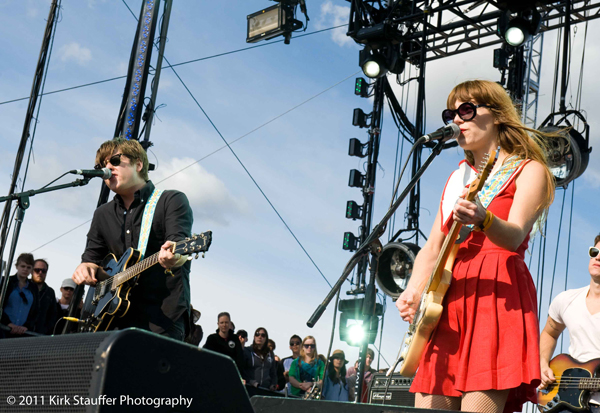
Tuesday nights, in general, are tough nights to get a crowd into a venue to see some live music. After all, most people have work or school on Wednesday morning, and Tuesday just isn’t close enough to Friday to call in sick. So when you have a couple of up-and-coming bands from fairly obscure places (North Wales and Anacortes, WA) sell out one of Seattle’s best-known clubs on a Tuesday night, you know you’ve got some powerful draws there. The Joy Formidable and The Lonely Forest provided the Croc’s Tuesday night pioneers with a superb evening of sonic goodness, showing performance and songwriting skills one would expect from far more seasoned bands.

I absolutely love the mix that Ritzy Bryan, Rhydian Dafydd and Matt Thomas bring to The Joy Formidable: classic melodic pop meets My Bloody Valentine somewhere in the middle, forging very accessible and strong work. It’s a big, big sound this trio makes, but not bludgeoning – the band’s dynamic range is impressive, moving seamlessly between quiet, emotional pieces and molten-steel walls of chaos and noise. There is a genuine sweetness, ease, and playfulness onstage between the band members and in interactions with the audience; their enjoyment and confidence was infectious. Bryan smiled like an angel, then proceeded to knock the audience on their asses as she stomped around the stage like Guitar Godzilla. She pounded drums, smashed effects pedals, and generally owned the stage completely, reminding me strongly of fellow tiny Welsh blonde Mary Hopkin (the ‘60s “Those Were The Days” songstress). . . if Hopkin picked up some dirty shreddy guitar skills.

NW indie-faves The Lonely Forest provided excellent support with an energetic set which set aside their quieter material for the night, and it served them well. They, too, had a camaraderie that was strongly evident, built from their five years of live shows. Hometown crowds (or close enough) are always a treat for a band to play to, and The Lonely Forest seemed a little awestruck and very happy about the very loud and enthusiastic crowd response they received. I think I saw the drummer blush behind his beard. They are a young band who have suffered a little at times from some lyrical simplicity/naiveté, but seem to be maturing very quickly, and they already have their live chops down. Very likable bunch.

The Croc was the place to be on a Tuesday. The crowd ate it up, and I think we all would’ve stayed on far longer if the bands had kept playing, Wednesday morning be damned.

Review by Marianne Spellman


The Joy Formidable – photo by Marianne Spellman


The Joy Formidable – photo by Simon Krane


The Lonely Forest – photo by Simon Krane


The Lonely Forest – photo by Marianne Spellman


Joy Formidable – photos by Marianne Spellman


The Joy Formidable – photos by Simon Krane


The Joy Formidable – photos by Marianne Spellman


The Joy Formidable– photos by Simon Krane


The Joy Formidable – photos by Marianne Spellman


The Joy Formidable – photos by Simon Krane


The Joy Formidable – photos by Marianne Spellman


The Joy Formidable – photos by Simon Krane


The Joy Formidable – photos by Marianne Spellman


The Lonely Forest – photos by Marianne Spellman


The Lonely Forest – photos by Simon Krane


The Lonely Forest – photos by Marianne Spellman


The Lonely Forest – photos by Simon Krane


The Lonely Forest – photos by Marianne Spellman


The Lonely Forest– photos by Simon Krane

Interview & Show Preview: Mike Watt @ the Triple Door, Wed. 4/27

Mike Watt‘s on his third opera. Watt’s first two were 1997’s Contemplating the Engine Room and 2004’s The Secondman’s Middle Stand, and for opera number three, Hyphenated-Man, he drew inspiration from paintings. In order to understand the titles and concept of each song on Hyphenated-Man, you might want to have a look at the Hieronymous Bosch paintings Watt tripped out on. What did Watt see in the Netherlandish painter’s Renaissance works? Well, lots of the crazy, disturbing little things we see happening. He related. You could see Hyphenated-Man as setting Bosch’s the Temptation of St. Anthony, the Garden of Earthly Delights and the Last Judgment to music. For an excellent focus on several parts of the Garden of Earthly Delights, check out this piece in the New York Times. Watt also drew on the story of the Wizard of Oz, and I’ll let him explain all this, plus why he chose to write Hyphenated-Man‘s songs on his departed friend and fellow Minuteman, D. Boon’s guitar. Mike Watt & the Missing Men play the Triple Door this Wednesday, April 27th.

You’re bringing a couple musicians with you as the Missingmen– how did you find them? [My answer to this question quickly went into the process of creating Hyphenated-Man – Watt is really thorough, and I love that].

Mike Watt: They helped me record the album. Raul Morales [drummer] lives in and is from San Pedro, and Tom Watson’s [guitar] not too far away – he’s from Manhattan Beach. It’s a completely different world but it’s only about fifteen or sixteen miles away. Tom was in a band in the ’80s called Slovenly. We actually did gigs with them. He’s about five years younger than me, but in a way kind of a peer. He was influenced by D. Boon’s guitar style, so he’s kind of a guy from the old days. Raul was part of a punk scene that developed in Pedro in the ’90s. In the Minutemen days we were the only punk rockers in our town. There was no scene. We were the scene. So in a weird way, he’s like an heir. I have two guys from different worlds. I was kind of using some Minutemen stuff – you know this documentary We Jam Econo? I was asked to help make that. Keith[Schieron] and Tim [Irwin] were making it and they were too young to see the Minutemen so the story was about them finding out about us. I had to listen to Minutemen again. When D. Boon got killed I didn’t listen much anymore. I started hearing it again and it was like, wow, I kind of like this. There’s no filler – I wanna work this way again somehow. Around the same time I was on tour with the Stooges in Spain – in Madrid. They’ve got a museum there called the Prado, and they had some paintings there by this guy that used to trip me out when I was young. I’d only seen pictures in the encyclopedia. His name was Hieronymous Bosch. They’ve got seven or eight of them in there. They call him el Bosco. I saw these things in real life, no glass, right on wood – much different than a picture in an encyclopedia. I was into dinosaurs and astronauts as a boy, but the little creatures he’d draw – looking at it, he had all these little things to make one big work. It kind of reminded me of Minutemen in a way. I saw the parallel. I thought, this will be the device. I’m a fifty three-year-old punk rocker, I thought this was a trippy thing to write about. I brought in this other idea too: Dorothy in the Wizard of Oz. She’s got some companions, she’s got this lion, a scarecrow, a tin man – and they’re actually the farmhands. My idea of Dorothy is a kind of coming of age story. I think the love interest is the dog. But coming of age this way, she’s tripping on what dudes do to be dudes. Notice they’re made of different parts, and there’s flying monkey men and munchkin men and the man behind the curtain, and the witch guard men. All these different roles. . . where I come if you’re smart you get a diploma, if you’re brave you get a medal, if you have a heart you get a clock (that last one is kind of lame). The way I take it is we’re always asking society to validate us, but the reality is that we’ve got to make up our own minds about some of this stuff. I think that’s kind of what the middle years are about. You do some of that when you’re younger too. It doesn’t have to be the big freak out everybody makes it. The bottom line is life’s for learning. Even as a young boy, I couldn’t articulate what it was about her in dealing with this world she’d gotten into. It’s trippy for women. Their destiny is some kind of witch. You can tell a man wrote it – I don’t think it’s a total woman’s point of view. For my third opera I kind of put myself as her, a woman, to talk about this guy stuff. The way I wrote this was so in the moment, the order of the songs is almost in the order I wrote them. I wanted to be right in the moment. I was going to end with Man-Shitting-Man but that was way too fucking down. A lot of it’s about reconciling things, but I could not reconcile the way humans treat each other sometimes. It’s beyond me. To end the whole piece with that, it’s like I got caught up in the big Bosch picture instead of the little one. Too much last judgment. There are some really bad things you can’t be naïve about if you live. The way I’ve always written songs, going back to Minutemen, is starting off with titles. Then I write the music, then I write the Spiel. In a way Bosch helped me with the creatures, I could look at different parts of myself. Give me a little focus.

You have a cool anchor necklace I’ve seen you wearing. Where did you get that?

MW: Yeah, someone gave that to me in the first opera. Must have been twelve or thirteen years ago. I was playing T.T. the Bears [in Boston] and I was unloading the gear and somebody said hey, Mike Watt, take this – and just handed it to me. I thought it would be good luck to wear it. My father was a sailor. I have some bicycle spokes that someone gave me that I wear around my wrist, as a bracelet.

You wrote this album on D. Boon’s guitar. I can’t imagine how overwhelming that was.

MW: Some of these things were scary for me to talk about. Once I got them out it was okay. It was hard to get the nerve up at first. I was asking him to help me. I don’t know much guitar, only what he taught me. There was this hippie guy named Roy Mendez Lopez who lived in his car who showed me notes and stuff when we were boys. I can’t hold a pick.


Mike Watt

I was listening to Funanori and really liked it.

MW: That’s how I got going with all this collaboration stuff. With the Internet you don’t have to be in the room with people. It’s much different. It was scary but it’s actually pretty interesting because it has its own sensibility. There’s a Funanori album coming. I started my own label [Clenched Wrench] – I’ve got twelve or thirteen things in the pipeline. The first opera came out in 1997 and Funanori in 2007, so in those ten years I only did a few recorded works and thousands of gigs, so I felt a little out of balance. I never had children, this is the closest I get to children. One of the parts of the opera, “Baby-Cradling-Tree-Man” is about that. When I record these works, they have a life of their own, they’ll be here without me. I never thought about that in the old days. We always thought of records as some sort of flier to get people to the gigs.

It’s different now.

MW: It’s me being different. I’m glad I did those Minutemen records and they weren’t jut fucking fliers. I get to hear myself playing with D. Boon. But we just didn’t think that way, we didn’t think so much about what’s in the future. I think part of being middle-aged is that you do think a little bit about the future – and you’re not gonna be there. Some of it but not all of it. It can make you more earnest. That’s why I’ve been on a tear getting all these things together.

What else is in the pipeline for the label?

MW: The next one will be Dos. We’ve got a fourth album coming out in May. Yuka Honda mixed it – it’s pretty trippy. Kira [Roessler] does audio now for movies and television. She got an Emmy for the John Adams mini-series. She still loves music of course. This is her biggest outlet, Dos. Then I have an album I did in Italy with two Italian musicians [ il sogno del marinaio] Then I’ve got a Spiel Gusher album coming out.

When you’re playing as a Stooge live with the Stooges, do you ever just get totally surprised by Iggy Pop?

MW: I watch him about 90 percent of the time. For one thing he’s a total trip. There’s nothing like him. The other thing is he’s kind of like a conductor. He’s very aware of everything – he’s really helped me become a better bass player. I grew up with that music, I get into it. His work ethic is incredible. I told his wife that if a garbage disposal opened up onstage and he jumped in I’d probably jump in after him. I get so caught up in it. I really feel I owe him and the Stooges my best playing. We wouldn’t have a punk scene without the Stooges. It’s the weirdest thing, something I’d never guess happening to me, but it is a very interesting classroom.

I was reading that the Minutemen never thought of themselves as punk?

MW: We never thought of punk as a style of music. Punk was more in your mind. Every band was in charge of their own style of music. In a way it was good because it could never become old-fashioned.

How did you come up with the song “Pelicanman”?

MW: I was forty two when the sickness hit me and almost killed me (Watt was ill with an infection in 2000). I wrote an opera about this. I knew the Divine Comedy. I almost died of pneumonia when I was twenty two and I never wrote a song about that. “Pelicanman” is the final part of that opera. I was starting to get to the middle years. Pelicans don’t have a song. They’re quiet. I had the idea that some things are beyond words, some truth and knowledge – and that’s the pelican man. A transcendent state. I was going to have one instrumental on this third opera, but I thought, you know what – this is all about words.

You met D. Boon when you were thirteen?

MW: I was thirteen – I had just moved from the Navy houses to the projects here in San Pedro and he jumped out of a tree on me in the park. He thought I was some guy named Eskimo, one of his friends. He starts rattling off all these little bits to me. And I’m thinking, fuck, this is the smartest guy in the world. He was just rolling them off. Then the next day I went to his pad, and he gets out this record his brother had given him called Class Clown by George Carlin. All those bits he was telling me the day before, they were all on here.

What are some of the challenges in creating bass solos?

MW: You want the solo to aid and abet the tune. You don’t want it to live in its own little world. You want to tie it to the tune, and that’s where it can become difficult. You have to figure out what the essence of the tune is. Bass, most of the time, is the support. I think even when it goes out into solo world it still nurtures the tune.

By the way, I really love that song “Pissbags and Tubing”.

MW: I had to live that. At first I was really into it – watching the sack and it would fill up. The surgeon told me, Mr. Watt – that bladder infection, if that thing blocks up you’ll be wearing that sac forever. I remember laughing at my sisters for bladder infections. It was like pissing fish hooks. The tubes let in the germs. At first it was really cool, watching the sack fill up. You didn’t have to move one inch. Men have longer urethras. When I used the Divine Comedy by Dante I used hell for sickness, purgatory for healing and paradise for playing my bass.

interview by Dagmar

Photos: Deftones & the Dillinger Escape Plan @ the Paramount

On Thursday, April 14th Deftones and the Dillinger Escape Plan played live and loud at the Paramount – along with an awesome digital owl backdrop and major attack strobes in their respective sets. These are a couple forceful bands, and I was just a little terrified taking photos of the Dillinger Escape Plan. They know what they’re doing, but that didn’t stop me from thinking they could just leap off that stage at any second and hit me with a guitar or two.


Deftones


Dillinger Escape Plan – all photos by Dagmar

Gallery of Deftones @ the Paramount
Gallery of the Dillinger Escape Plan @ the Paramount